

<pre id="nipug"></pre>

      <cite id="nipug"><track id="nipug"></track></cite>
      • <blockquote id="nipug"></blockquote>
        八戒八戒影视在线观看大全,农民伯伯2中字新版本更新内容,《女子护卫队》完整版,台剧《浪漫女家教》中文字幕版 ,法国《爱上儿子》全集在线看,男生和女生一起愁愁电视剧美国,《公的浮之手中字》免费在线观看,日韩大片电视剧在线哇嘎
         Home Page | Photos | Video | Forum | Most Popular | Special Reports | Biz China Weekly
        Make Us Your Home Page
         
        Jointly Shoulder Responsibility of Our Times, Promote Global Growth
                         | 2017-01-18 01:02:14 | Editor: yan

        SWITZERLAND-DAVOS-CHINA-XI JINPING-KEYNOTE SPEECH

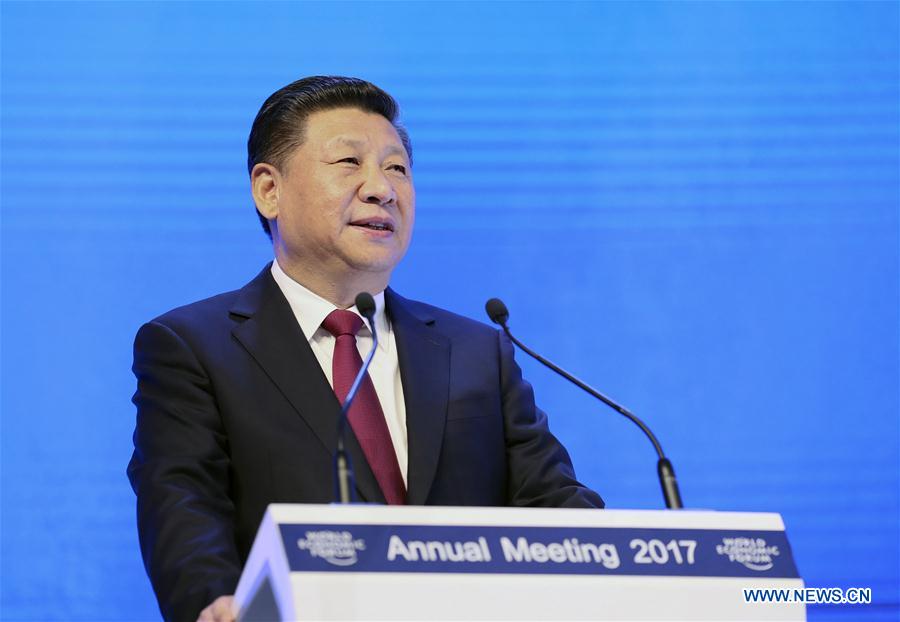
        Chinese PresidentXi Jinping?delivers a keynote speech at the opening plenary of the 2017 annual meeting of the World Economic Forum in Davos, Switzerland, Jan. 17, 2017. (Xinhua/Lan Hongguang)?

        Jointly Shoulder Responsibility of Our Times, Promote Global Growth

        Keynote Speech by H.E. Xi Jinping

        President of the People’s Republic of China

        At the Opening Session

        Of the World Economic Forum Annual Meeting 2017

        Davos, 17 January 2017

        President Doris Leuthard and Mr. Roland Hausin,

        Heads of State and Government, Deputy Heads of State and Your Spouses,

        Heads of International Organizations,

        Dr. Klaus Schwab and Mrs. Hilde Schwab,

        Ladies and Gentlemen,

        Dear Friends,

        I’m delighted to come to beautiful Davos. Though just a small town in the Alps, Davos is an important window for taking the pulse of the global economy. People from around the world come here to exchange ideas and insights, which broaden their vision. This makes the WEF annual meeting a cost-effective brainstorming event, which I would call “Schwab economics”.

        “It was the best of times, it was the worst of times.” These are the words used by the English writer Charles Dickens to describe the world after the Industrial Revolution. Today, we also live in a world of contradictions. On the one hand, with growing material wealth and advances in science and technology, human civilization has developed as never before. On the other hand, frequent regional conflicts, global challenges like terrorism and refugees, as well as poverty, unemployment and widening income gap have all added to the uncertainties of the world.

        Many people feel bewildered and wonder: What has gone wrong with the world?

        To answer this question, one must first track the source of the problem. Some blame economic globalization for the chaos in the world. Economic globalization was once viewed as the treasure cave found by Ali Baba in The Arabian Nights, but it has now become the Pandora’s box in the eyes of many. The international community finds itself in a heated debate on economic globalization.

        Today, I wish to address the global economy in the context of economic globalization.

        The point I want to make is that many of the problems troubling the world are not caused by economic globalization. For instance, the refugee waves from the Middle East and North Africa in recent years have become a global concern. Several million people have been displaced, and some small children lost their lives while crossing the rough sea. This is indeed heartbreaking. It is war, conflict and regional turbulence that have created this problem, and its solution lies in making peace, promoting reconciliation and restoring stability. The international financial crisis is another example. It is not an inevitable outcome of economic globalization; rather, it is the consequence of excessive chase of profit by financial capital and grave failure of financial regulation. Just blaming economic globalization for the world’s problems is inconsistent with reality, and it will not help solve the problems.

        From the historical perspective, economic globalization resulted from growing social productivity, and is a natural outcome of scientific and technological progress, not something created by any individuals or any countries. Economic globalization has powered global growth and facilitated movement of goods and capital, advances in science, technology and civilization, and interactions among peoples.

        But we should also recognize that economic globalization is a double-edged sword. When the global economy is under downward pressure, it is hard to make the cake of global economy bigger. It may even shrink, which will strain the relations between growth and distribution, between capital and labor, and between efficiency and equity. Both developed and developing countries have felt the punch. Voices against globalization have laid bare pitfalls in the process of economic globalization that we need to take seriously.

        As a line in an old Chinese poem goes, “Honey melons hang on bitter vines; sweet dates grow on thistles and thorns.” In a philosophical sense, nothing is perfect in the world. One would fail to see the full picture if he claims something is perfect because of its merits, or if he views something as useless just because of its defects. It is true that economic globalization has created new problems, but this is no justification to write economic globalization off completely. Rather, we should adapt to and guide economic globalization, cushion its negative impact, and deliver its benefits to all countries and all nations.

        There was a time when China also had doubts about economic globalization, and was not sure whether it should join the World Trade Organization. But we came to the conclusion that integration into the global economy is a historical trend. To grow its economy, China must have the courage to swim in the vast ocean of the global market. If one is always afraid of bracing the storm and exploring the new world, he will sooner or later get drowned in the ocean. Therefore, China took a brave step to embrace the global market. We have had our fair share of choking in the water and encountered whirlpools and choppy waves, but we have learned how to swim in this process. It has proved to be a right strategic choice.

        Whether you like it or not, the global economy is the big ocean that you cannot escape from. Any attempt to cut off the flow of capital, technologies, products, industries and people between economies, and channel the waters in the ocean back into isolated lakes and creeks is simply not possible. Indeed, it runs counter to the historical trend.

        The history of mankind tells us that problems are not to be feared. What should concern us is refusing to face up to problems and not knowing what to do about them. In the face of both opportunities and challenges of economic globalization, the right thing to do is to seize every opportunity, jointly meet challenges and chart the right course for economic globalization.

        At the APEC Economic Leaders’ Meeting in late 2016, I spoke about the necessity to make the process of economic globalization more invigorated, more inclusive and more sustainable. We should act pro-actively and manage economic globalization as appropriate so as to release its positive impact and rebalance the process of economic globalization. We should follow the general trend, proceed from our respective national conditions and embark on the right pathway of integrating into economic globalization with the right pace. We should strike a balance between efficiency and equity to ensure that different countries, different social strata and different groups of people all share in the benefits of economic globalization. The people of all countries expect nothing less from us, and this is our unshirkable responsibility as leaders of our times.??

        Ladies and Gentlemen, Dear Friends,

        At present, the most pressing task before us is to steer the global economy out of difficulty. The global economy has remained sluggish for quite some time. The gap between the poor and the rich and between the South and the North is widening. The root cause is that the three critical issues in the economic sphere have not been effectively addressed.

        First, lack of robust driving forces for global growth makes it difficult to sustain the steady growth of the global economy. The growth of the global economy is now at its slowest pace in seven years. Growth of global trade has been slower than global GDP growth. Short-term policy stimuli are ineffective. Fundamental structural reform is just unfolding. The global economy is now in a period of moving toward new growth drivers, and the role of traditional engines to drive growth has weakened. Despite the emergence of new technologies such as artificial intelligence and 3D printing, new sources of growth are yet to emerge. A new path for the global economy remains elusive.

        Second, inadequate global economic governance makes it difficult to adapt to new developments in the global economy. Madame Christine Lagarde recently told me that emerging markets and developing countries already contribute to 80% of the growth of the global economy. The global economic landscape has changed profoundly in the past few decades. However, the global governance system has not embraced those new changes and is therefore inadequate in terms of representation and inclusiveness. The global industrial landscape is changing and new industrial chains, value chains and supply chains are taking shape. However, trade and investment rules have not kept pace with these developments, resulting in acute problems such as closed mechanisms and fragmentation of rules. The global financial market needs to be more resilient against risks, but the global financial governance mechanism fails to meet the new requirement and is thus unable to effectively resolve problems such as frequent international financial market volatility and the build-up of asset bubbles.

        Third, uneven global development makes it difficult to meet people’s expectations for better lives. Dr. Schwab has observed in his book The Fourth Industrial Revolution that this round of industrial revolution will produce extensive and far-reaching impacts such as growing inequality, particularly the possible widening gap between return on capital and return on labor. The richest one percent of the world’s population own more wealth than the remaining 99 percent. Inequality in income distribution and uneven development space are worrying. Over 700 million people in the world are still living in extreme poverty. For many families, to have warm houses, enough food and secure jobs is still a distant dream. This is the biggest challenge facing the world today. It is also what is behind the social turmoil in some countries.

        All this shows that there are indeed problems with world economic growth, governance and development models, and they must be resolved. The founder of the Red Cross Henry Dunant once said, “Our real enemy is not the neighboring country; it is hunger, poverty, ignorance, superstition and prejudice.” We need to have the vision to dissect these problems; more importantly, we need to have the courage to take actions to address them.

        First, we should develop a dynamic, innovation-driven growth model. The fundamental issue plaguing the global economy is the lack of driving force for growth. Innovation is the primary force guiding development. Unlike the previous industrial revolutions, the fourth industrial revolution is unfolding at an exponential rather than linear pace. We need to relentlessly pursue innovation. Only with the courage to innovate and reform can we remove bottlenecks blocking global growth and development.

        With this in mind, G20 leaders reached an important consensus at the Hangzhou Summit, which is to take innovation as a key driver and foster new driving force of growth for both individual countries and the global economy. We should develop a new development philosophy and rise above the debate about whether there should be more fiscal stimulus or more monetary easing. We should adopt a multipronged approach to address both the symptoms and the underlying problems. We should adopt new policy instruments and advance structural reform to create more space for growth and sustain its momentum. We should develop new growth models and seize opportunities presented by the new round of industrial revolution and digital economy. We should meet the challenges of climate change and aging population. We should address the negative impact of IT application and automation on jobs. When cultivating new industries and new forms models of business models, we should create new jobs and restore confidence and hope to our peoples.

        Second, we should pursue a well-coordinated and inter-connected approach to develop a model of open and win-win cooperation. Today, mankind has become a close-knit community of shared future. Countries have extensive converging interests and are mutually dependent. All countries enjoy the right to development. At the same time, they should view their own interests in a broader context and refrain from pursuing them at the expense of others.

        We should commit ourselves to growing an open global economy to share opportunities and interests through opening-up and achieve win-win outcomes. One should not just retreat to the harbor when encountering a storm, for this will never get us to the other shore of the ocean. We must redouble efforts to develop global connectivity to enable all countries to achieve inter-connected growth and share prosperity. We must remain committed to developing global free trade and investment, promote trade and investment liberalization and facilitation through opening-up and say no to protectionism. Pursuing protectionism is like locking oneself in a dark room. While wind and rain may be kept outside, that dark room will also block light and air. No one will emerge as a winner in a trade war.

        Third, we should develop a model of fair and equitable governance in keeping with the trend of the times. As the Chinese saying goes, people with petty shrewdness attend to trivial matters, while people with vision attend to governance of institutions. There is a growing call from the international community for reforming the global economic governance system, which is a pressing task for us. Only when it adapts to new dynamics in the international economic architecture can the global governance system sustain global growth.

        Countries, big or small, strong or weak, rich or poor, are all equal members of the international community. As such, they are entitled to participate in decision-making, enjoy rights and fulfill obligations on an equal basis. Emerging markets and developing countries deserve greater representation and voice. The 2010 IMF quota reform has entered into force, and its momentum should be sustained. We should adhere to multilateralism to uphold the authority and efficacy of multilateral institutions. We should honor promises and abide by rules. One should not select or bend rules as he sees fit. The Paris Agreement is a hard-won achievement which is in keeping with the underlying trend of global development. All signatories should stick to it instead of walking away from it as this is a responsibility we must assume for future generations.

        Fourth, we should develop a balanced, equitable and inclusive development model. As the Chinese saying goes, “A just cause should be pursued for common good.” Development is ultimately for the people. To achieve more balanced development and ensure that the people have equal access to opportunities and share in the benefits of development, it is crucial to have a sound development philosophy and model and make development equitable, effective and balanced.

        We should foster a culture that values diligence, frugality and enterprise and respects the fruits of hard work of all. Priority should be given to addressing poverty, unemployment, the widening income gap and the concerns of the disadvantaged to promote social equity and justice. It is important to protect the environment while pursuing economic and social progress so as to achieve harmony between man and nature and between man and society. The 2030 Agenda for Sustainable Development should be implemented to realize balanced development across the world.

        A Chinese adage reads, “Victory is ensured when people pool their strength; success is secured when people put their heads together.” As long as we keep to the goal of building a community of shared future for mankind and work hand in hand to fulfill our responsibilities and overcome difficulties, we will be able to create a better world and deliver better lives for our peoples.?

        Ladies and Gentlemen, Dear Friends,

        China has become the world’s second largest economy thanks to 38 years of reform and opening-up. A right path leads to a bright future. China has come this far because the Chinese people have, under the leadership of the Communist Party of China, blazed a development path that suits China’s actual conditions.

        This is a path based on China’s realities. China has in the past years succeeded in embarking on a development path that suits itself by drawing on both the wisdom of its civilization and the practices of other countries in both East and West. In exploring this path, China refuses to stay insensitive to the changing times or to blindly follow in others’ footsteps. All roads lead to Rome. No country should view its own development path as the only viable one, still less should it impose its own development path on others.

        This is a path that puts people’s interests first. China follows a people-oriented development philosophy and is committed to bettering the lives of its people. Development is of the people, by the people and for the people. China pursues the goal of common prosperity. We have taken major steps to alleviate poverty and lifted over 700 million people out of poverty, and good progress is being made in our efforts to finish building a society of initial prosperity in all respects.

        This is a path of pursuing reform and innovation. China has tackled difficulties and met challenges on its way forward through reform. China has demonstrated its courage to take on difficult issues, navigate treacherous rapids and remove institutional hurdles standing in the way of development. These efforts have enabled us to unleash productivity and social vitality. Building on progress of 30-odd years of reform, we have introduced more than 1,200 reform measures over the past four years, injecting powerful impetus into China’s development.

        This is a path of pursuing common development through opening-up. China is committed to a fundamental policy of opening-up and pursues a win-win opening-up strategy. China’s development is both domestic and external oriented; while developing itself, China also shares more of its development outcomes with other countries and peoples.

        China’s outstanding development achievements and the vastly improved living standards of the Chinese people are a blessing to both China and the world. Such achievements in development over the past decades owe themselves to the hard work and perseverance of the Chinese people, a quality that has defined the Chinese nation for several thousand years. We Chinese know only too well that there is no such thing as a free lunch in the world. For a big country with over 1.3 billion people, development can be achieved only with the dedication and tireless efforts of its own people. We cannot expect others to deliver development to China, and no one is in a position to do so. When assessing China’s development, one should not only see what benefits the Chinese people have gained, but also how much hard effort they have put in, not just what achievements China has made, but also what contribution China has made to the world. Then one will reach a balanced conclusion about China’s development.

        Between 1950 and 2016, despite its modest level of development and living standard, China provided more than 400 billion yuan of foreign assistance, undertook over 5,000 foreign assistance projects, including nearly 3,000 complete projects, and held over 11,000 training workshops in China for over 260,000 personnel from other developing countries. Since it launched reform and opening-up, China has attracted over 1.7 trillion US dollars of foreign investment and made over 1.2 trillion US dollars of direct outbound investment, making huge contribution to global economic development. In the years following the outbreak of the international financial crisis, China contributed to over 30% of global growth every year on average. All these figures are among the highest in the world.

        The figures speak for themselves. China’s development is an opportunity for the world; China has not only benefited from economic globalization but also contributed to it. Rapid growth in China has been a sustained, powerful engine for global economic stability and expansion. The inter-connected development of China and a large number of other countries has made the world economy more balanced. China’s remarkable achievement in poverty reduction has contributed to more inclusive global growth. And China’s continuous progress in reform and opening-up has lent much momentum to an open world economy.

        We Chinese know only too well what it takes to achieve prosperity, so we applaud the achievements made by others and wish them a better future. We are not jealous of others’ success; and we will not complain about others who have benefited so much from the great opportunities presented by China’s development. We will open our arms to the people of other countries and welcome them aboard the express train of China’s development.?

        Ladies and Gentlemen, Dear Friends,

        I know you are all closely following China’s economic development, and let me give you an update on the state of China’s economy. China’s economy has entered what we call a new normal, in which major changes are taking place in terms of growth rate, development model, economic structure and drivers of growth. But the economic fundamentals sustaining sound development remain unchanged.

        Despite a sluggish global economy, China’s economy is expected to grow by 6.7% in 2016, still one of the highest in the world. China’s economy is far bigger in size than in the past, and it now generates more output than it did with double-digit growth in the past. Household consumption and the services sector have become the main drivers of growth. In the first three quarters of 2016, added value of the tertiary industry took up 52.8% of the GDP and domestic consumption contributed to 71% of economic growth. Household income and employment have steadily risen, while per unit GDP energy consumption continues to drop. Our efforts to pursue green development are paying off.

        The Chinese economy faces downward pressure and many difficulties, including acute mismatch between excess capacity and an upgrading demand structure, lack of internal driving force for growth, accumulation of financial risks, and growing challenges in certain regions. We see these as temporary hardships that occur on the way forward. And the measures we have taken to address these problems are producing good results. We are firm in our resolve to forge ahead. China is the world’s largest developing country with over 1.3 billion people, and their living standards are not yet high. But this reality also means China has enormous potential and space for development. Guided by the vision of innovative, coordinated, green, open and shared development, we will adapt to the new normal, stay ahead of the curve, and make coordinated efforts to maintain steady growth, accelerate reform, adjust economic structure, improve people’s living standards and fend off risks. With these efforts, we aim to achieve medium-high rate of growth and upgrade the economy to higher end of the value chain.

        China will strive to enhance the performance of economic growth. We will pursue supply-side structural reform as the general goal, shift the growth model and upgrade the economic structure. We will continue to cut overcapacity, reduce inventory, deleverage financing, reduce cost and strengthen weak links. We will foster new drivers of growth, develop an advanced manufacturing sector and upgrade the real economy. We will implement the Internet Plus action plan to boost effective demand and better meet the individualized and diverse needs of consumers. And we will do more to protect the ecosystem.

        — China will boost market vitality to add new impetus to growth. We will intensify reform efforts in priority areas and key links and enable the market to play a decisive role in resources allocation. Innovation will continue to feature prominently on our growth agenda. In pursuing the strategy of innovation-driven development, we will bolster the strategic emerging industries, apply new technologies and foster new business models to upgrade traditional industries; and we will boost new drivers of growth and revitalize traditional ones.

        — China will foster an enabling and orderly environment for investment. We will expand market access for foreign investors, build high-standard pilot free trade zones, strengthen protection of property rights, and level the playing field to make China’s market more transparent and better regulated. In the coming five years, China is expected to import eight trillion US dollars of goods, attract 600 billion US dollars of foreign investment and make 750 billion US dollars of outbound investment. Chinese tourists will make 700 million overseas visits. All this will create a bigger market, more capital, more products and more business opportunities for other countries. China’s development will continue to offer opportunities to business communities in other countries. China will keep its door wide open and not close it. An open door allows both other countries to access the Chinese market and China itself to integrate with the world. And we hope that other countries will also keep their door open to Chinese investors and keep the playing field level for us.

        — China will vigorously foster an external environment of opening-up for common development. We will advance the building of the Free Trade Area of the Asia Pacific and negotiations of the Regional Comprehensive Economic Partnership to form a global network of free trade arrangements. China stands for concluding open, transparent and win-win regional free trade arrangements and opposes forming exclusive groups that are fragmented in nature. China has no intention to boost its trade competitiveness by devaluing the RMB, still less will it launch a currency war.

        Over three years ago, I put forward the “Belt and Road” initiative. Since then, over 100 countries and international organizations have given warm responses and support to the initiative. More than 40 countries and international organizations have signed cooperation agreements with China, and our circle of friends along the “Belt and Road” is growing bigger. Chinese companies have made over 50 billion US dollars of investment and launched a number of major projects in the countries along the routes, spurring the economic development of these countries and creating many local jobs. The “Belt and Road” initiative originated in China, but it has delivered benefits well beyond its borders.

        In May this year, China will host in Beijing the Belt and Road Forum for International Cooperation, which aims to discuss ways to boost cooperation, build cooperation platforms and share cooperation outcomes. The forum will also explore ways to address problems facing global and regional economy, create fresh energy for pursuing inter-connected development and make the “Belt and Road” initiative deliver greater benefits to people of countries involved.?

        Ladies and Gentlemen, Dear Friends,

        World history shows that the road of human civilization has never been a smooth one, and that mankind has made progress by surmounting difficulties. No difficulty, however daunting, will stop mankind from advancing. When encountering difficulties, we should not complain about ourselves, blame others, lose confidence or run away from responsibilities. We should join hands and rise to the challenge. History is created by the brave. Let us boost confidence, take actions and march arm-in-arm toward a bright future.

        Thank you!

        Related:

        10 takeaways from Xi's Davos speech

        DAVOS, Switzerland, Jan. 17 (Xinhua) -- Chinese President Xi Jinping delivered a keynote speech on Tuesday at the opening plenary of the 2017 annual meeting of the World Economic Forum in the Swiss town of Davos.

        Here are 10 quick takeaways from the 50-minute address, which touched upon globalization, protectionism, world economy and China's development among other subjects.?Full story

        Xi at Davos: key quotes that win over global elites

        DAVOS, Switzerland, Jan. 17 (Xinhua) -- Chinese President Xi Jinping grabbed global elites in Davos on Tuesday with an unusually straightforward keynote address on global issues at the World Economic Forum.

        Speaking on globalization, trade protectionism, climate change, development and China's economy, the Chinese president stroke a deep chord with business and political leaders at the annual gathering.? Full story

        Xi at Davos: Also a master of metaphors

        DAVOS, Switzerland, Jan. 17 (Xinhua) -- Ali Baba's treasure cave, double-edged sword, vast ocean, isolated creeks, dark room, express train ...

        In the snow-clad, star-studded Alpine town of Davos, Chinese President Xi Jinping has once again proved that he merits another title: master of metaphors.

        In the first appearance of any Chinese head of state at the World Economic Forum, Xi delivered a vivid speech at the opening plenary of the 2017 annual meeting and employed a trove of similes and metaphors to make his points on globalization, world economy, trade protectionism, China's development and other subjects.? Full story
        ?

        Back to Top Close
        Xinhuanet

        Jointly Shoulder Responsibility of Our Times, Promote Global Growth

        2017-01-18 01:02:14

        SWITZERLAND-DAVOS-CHINA-XI JINPING-KEYNOTE SPEECH

        Chinese PresidentXi Jinping?delivers a keynote speech at the opening plenary of the 2017 annual meeting of the World Economic Forum in Davos, Switzerland, Jan. 17, 2017. (Xinhua/Lan Hongguang)?

        Jointly Shoulder Responsibility of Our Times, Promote Global Growth

        Keynote Speech by H.E. Xi Jinping

        President of the People’s Republic of China

        At the Opening Session

        Of the World Economic Forum Annual Meeting 2017

        Davos, 17 January 2017

        President Doris Leuthard and Mr. Roland Hausin,

        Heads of State and Government, Deputy Heads of State and Your Spouses,

        Heads of International Organizations,

        Dr. Klaus Schwab and Mrs. Hilde Schwab,

        Ladies and Gentlemen,

        Dear Friends,

        I’m delighted to come to beautiful Davos. Though just a small town in the Alps, Davos is an important window for taking the pulse of the global economy. People from around the world come here to exchange ideas and insights, which broaden their vision. This makes the WEF annual meeting a cost-effective brainstorming event, which I would call “Schwab economics”.

        “It was the best of times, it was the worst of times.” These are the words used by the English writer Charles Dickens to describe the world after the Industrial Revolution. Today, we also live in a world of contradictions. On the one hand, with growing material wealth and advances in science and technology, human civilization has developed as never before. On the other hand, frequent regional conflicts, global challenges like terrorism and refugees, as well as poverty, unemployment and widening income gap have all added to the uncertainties of the world.

        Many people feel bewildered and wonder: What has gone wrong with the world?

        To answer this question, one must first track the source of the problem. Some blame economic globalization for the chaos in the world. Economic globalization was once viewed as the treasure cave found by Ali Baba in The Arabian Nights, but it has now become the Pandora’s box in the eyes of many. The international community finds itself in a heated debate on economic globalization.

        Today, I wish to address the global economy in the context of economic globalization.

        The point I want to make is that many of the problems troubling the world are not caused by economic globalization. For instance, the refugee waves from the Middle East and North Africa in recent years have become a global concern. Several million people have been displaced, and some small children lost their lives while crossing the rough sea. This is indeed heartbreaking. It is war, conflict and regional turbulence that have created this problem, and its solution lies in making peace, promoting reconciliation and restoring stability. The international financial crisis is another example. It is not an inevitable outcome of economic globalization; rather, it is the consequence of excessive chase of profit by financial capital and grave failure of financial regulation. Just blaming economic globalization for the world’s problems is inconsistent with reality, and it will not help solve the problems.

        From the historical perspective, economic globalization resulted from growing social productivity, and is a natural outcome of scientific and technological progress, not something created by any individuals or any countries. Economic globalization has powered global growth and facilitated movement of goods and capital, advances in science, technology and civilization, and interactions among peoples.

        But we should also recognize that economic globalization is a double-edged sword. When the global economy is under downward pressure, it is hard to make the cake of global economy bigger. It may even shrink, which will strain the relations between growth and distribution, between capital and labor, and between efficiency and equity. Both developed and developing countries have felt the punch. Voices against globalization have laid bare pitfalls in the process of economic globalization that we need to take seriously.

        As a line in an old Chinese poem goes, “Honey melons hang on bitter vines; sweet dates grow on thistles and thorns.” In a philosophical sense, nothing is perfect in the world. One would fail to see the full picture if he claims something is perfect because of its merits, or if he views something as useless just because of its defects. It is true that economic globalization has created new problems, but this is no justification to write economic globalization off completely. Rather, we should adapt to and guide economic globalization, cushion its negative impact, and deliver its benefits to all countries and all nations.

        There was a time when China also had doubts about economic globalization, and was not sure whether it should join the World Trade Organization. But we came to the conclusion that integration into the global economy is a historical trend. To grow its economy, China must have the courage to swim in the vast ocean of the global market. If one is always afraid of bracing the storm and exploring the new world, he will sooner or later get drowned in the ocean. Therefore, China took a brave step to embrace the global market. We have had our fair share of choking in the water and encountered whirlpools and choppy waves, but we have learned how to swim in this process. It has proved to be a right strategic choice.

        Whether you like it or not, the global economy is the big ocean that you cannot escape from. Any attempt to cut off the flow of capital, technologies, products, industries and people between economies, and channel the waters in the ocean back into isolated lakes and creeks is simply not possible. Indeed, it runs counter to the historical trend.

        The history of mankind tells us that problems are not to be feared. What should concern us is refusing to face up to problems and not knowing what to do about them. In the face of both opportunities and challenges of economic globalization, the right thing to do is to seize every opportunity, jointly meet challenges and chart the right course for economic globalization.

        At the APEC Economic Leaders’ Meeting in late 2016, I spoke about the necessity to make the process of economic globalization more invigorated, more inclusive and more sustainable. We should act pro-actively and manage economic globalization as appropriate so as to release its positive impact and rebalance the process of economic globalization. We should follow the general trend, proceed from our respective national conditions and embark on the right pathway of integrating into economic globalization with the right pace. We should strike a balance between efficiency and equity to ensure that different countries, different social strata and different groups of people all share in the benefits of economic globalization. The people of all countries expect nothing less from us, and this is our unshirkable responsibility as leaders of our times.??

        Ladies and Gentlemen, Dear Friends,

        At present, the most pressing task before us is to steer the global economy out of difficulty. The global economy has remained sluggish for quite some time. The gap between the poor and the rich and between the South and the North is widening. The root cause is that the three critical issues in the economic sphere have not been effectively addressed.

        First, lack of robust driving forces for global growth makes it difficult to sustain the steady growth of the global economy. The growth of the global economy is now at its slowest pace in seven years. Growth of global trade has been slower than global GDP growth. Short-term policy stimuli are ineffective. Fundamental structural reform is just unfolding. The global economy is now in a period of moving toward new growth drivers, and the role of traditional engines to drive growth has weakened. Despite the emergence of new technologies such as artificial intelligence and 3D printing, new sources of growth are yet to emerge. A new path for the global economy remains elusive.

        Second, inadequate global economic governance makes it difficult to adapt to new developments in the global economy. Madame Christine Lagarde recently told me that emerging markets and developing countries already contribute to 80% of the growth of the global economy. The global economic landscape has changed profoundly in the past few decades. However, the global governance system has not embraced those new changes and is therefore inadequate in terms of representation and inclusiveness. The global industrial landscape is changing and new industrial chains, value chains and supply chains are taking shape. However, trade and investment rules have not kept pace with these developments, resulting in acute problems such as closed mechanisms and fragmentation of rules. The global financial market needs to be more resilient against risks, but the global financial governance mechanism fails to meet the new requirement and is thus unable to effectively resolve problems such as frequent international financial market volatility and the build-up of asset bubbles.

        Third, uneven global development makes it difficult to meet people’s expectations for better lives. Dr. Schwab has observed in his book The Fourth Industrial Revolution that this round of industrial revolution will produce extensive and far-reaching impacts such as growing inequality, particularly the possible widening gap between return on capital and return on labor. The richest one percent of the world’s population own more wealth than the remaining 99 percent. Inequality in income distribution and uneven development space are worrying. Over 700 million people in the world are still living in extreme poverty. For many families, to have warm houses, enough food and secure jobs is still a distant dream. This is the biggest challenge facing the world today. It is also what is behind the social turmoil in some countries.

        All this shows that there are indeed problems with world economic growth, governance and development models, and they must be resolved. The founder of the Red Cross Henry Dunant once said, “Our real enemy is not the neighboring country; it is hunger, poverty, ignorance, superstition and prejudice.” We need to have the vision to dissect these problems; more importantly, we need to have the courage to take actions to address them.

        First, we should develop a dynamic, innovation-driven growth model. The fundamental issue plaguing the global economy is the lack of driving force for growth. Innovation is the primary force guiding development. Unlike the previous industrial revolutions, the fourth industrial revolution is unfolding at an exponential rather than linear pace. We need to relentlessly pursue innovation. Only with the courage to innovate and reform can we remove bottlenecks blocking global growth and development.

        With this in mind, G20 leaders reached an important consensus at the Hangzhou Summit, which is to take innovation as a key driver and foster new driving force of growth for both individual countries and the global economy. We should develop a new development philosophy and rise above the debate about whether there should be more fiscal stimulus or more monetary easing. We should adopt a multipronged approach to address both the symptoms and the underlying problems. We should adopt new policy instruments and advance structural reform to create more space for growth and sustain its momentum. We should develop new growth models and seize opportunities presented by the new round of industrial revolution and digital economy. We should meet the challenges of climate change and aging population. We should address the negative impact of IT application and automation on jobs. When cultivating new industries and new forms models of business models, we should create new jobs and restore confidence and hope to our peoples.

        Second, we should pursue a well-coordinated and inter-connected approach to develop a model of open and win-win cooperation. Today, mankind has become a close-knit community of shared future. Countries have extensive converging interests and are mutually dependent. All countries enjoy the right to development. At the same time, they should view their own interests in a broader context and refrain from pursuing them at the expense of others.

        We should commit ourselves to growing an open global economy to share opportunities and interests through opening-up and achieve win-win outcomes. One should not just retreat to the harbor when encountering a storm, for this will never get us to the other shore of the ocean. We must redouble efforts to develop global connectivity to enable all countries to achieve inter-connected growth and share prosperity. We must remain committed to developing global free trade and investment, promote trade and investment liberalization and facilitation through opening-up and say no to protectionism. Pursuing protectionism is like locking oneself in a dark room. While wind and rain may be kept outside, that dark room will also block light and air. No one will emerge as a winner in a trade war.

        Third, we should develop a model of fair and equitable governance in keeping with the trend of the times. As the Chinese saying goes, people with petty shrewdness attend to trivial matters, while people with vision attend to governance of institutions. There is a growing call from the international community for reforming the global economic governance system, which is a pressing task for us. Only when it adapts to new dynamics in the international economic architecture can the global governance system sustain global growth.

        Countries, big or small, strong or weak, rich or poor, are all equal members of the international community. As such, they are entitled to participate in decision-making, enjoy rights and fulfill obligations on an equal basis. Emerging markets and developing countries deserve greater representation and voice. The 2010 IMF quota reform has entered into force, and its momentum should be sustained. We should adhere to multilateralism to uphold the authority and efficacy of multilateral institutions. We should honor promises and abide by rules. One should not select or bend rules as he sees fit. The Paris Agreement is a hard-won achievement which is in keeping with the underlying trend of global development. All signatories should stick to it instead of walking away from it as this is a responsibility we must assume for future generations.

        Fourth, we should develop a balanced, equitable and inclusive development model. As the Chinese saying goes, “A just cause should be pursued for common good.” Development is ultimately for the people. To achieve more balanced development and ensure that the people have equal access to opportunities and share in the benefits of development, it is crucial to have a sound development philosophy and model and make development equitable, effective and balanced.

        We should foster a culture that values diligence, frugality and enterprise and respects the fruits of hard work of all. Priority should be given to addressing poverty, unemployment, the widening income gap and the concerns of the disadvantaged to promote social equity and justice. It is important to protect the environment while pursuing economic and social progress so as to achieve harmony between man and nature and between man and society. The 2030 Agenda for Sustainable Development should be implemented to realize balanced development across the world.

        A Chinese adage reads, “Victory is ensured when people pool their strength; success is secured when people put their heads together.” As long as we keep to the goal of building a community of shared future for mankind and work hand in hand to fulfill our responsibilities and overcome difficulties, we will be able to create a better world and deliver better lives for our peoples.?

        Ladies and Gentlemen, Dear Friends,

        China has become the world’s second largest economy thanks to 38 years of reform and opening-up. A right path leads to a bright future. China has come this far because the Chinese people have, under the leadership of the Communist Party of China, blazed a development path that suits China’s actual conditions.

        This is a path based on China’s realities. China has in the past years succeeded in embarking on a development path that suits itself by drawing on both the wisdom of its civilization and the practices of other countries in both East and West. In exploring this path, China refuses to stay insensitive to the changing times or to blindly follow in others’ footsteps. All roads lead to Rome. No country should view its own development path as the only viable one, still less should it impose its own development path on others.

        This is a path that puts people’s interests first. China follows a people-oriented development philosophy and is committed to bettering the lives of its people. Development is of the people, by the people and for the people. China pursues the goal of common prosperity. We have taken major steps to alleviate poverty and lifted over 700 million people out of poverty, and good progress is being made in our efforts to finish building a society of initial prosperity in all respects.

        This is a path of pursuing reform and innovation. China has tackled difficulties and met challenges on its way forward through reform. China has demonstrated its courage to take on difficult issues, navigate treacherous rapids and remove institutional hurdles standing in the way of development. These efforts have enabled us to unleash productivity and social vitality. Building on progress of 30-odd years of reform, we have introduced more than 1,200 reform measures over the past four years, injecting powerful impetus into China’s development.

        This is a path of pursuing common development through opening-up. China is committed to a fundamental policy of opening-up and pursues a win-win opening-up strategy. China’s development is both domestic and external oriented; while developing itself, China also shares more of its development outcomes with other countries and peoples.

        China’s outstanding development achievements and the vastly improved living standards of the Chinese people are a blessing to both China and the world. Such achievements in development over the past decades owe themselves to the hard work and perseverance of the Chinese people, a quality that has defined the Chinese nation for several thousand years. We Chinese know only too well that there is no such thing as a free lunch in the world. For a big country with over 1.3 billion people, development can be achieved only with the dedication and tireless efforts of its own people. We cannot expect others to deliver development to China, and no one is in a position to do so. When assessing China’s development, one should not only see what benefits the Chinese people have gained, but also how much hard effort they have put in, not just what achievements China has made, but also what contribution China has made to the world. Then one will reach a balanced conclusion about China’s development.

        Between 1950 and 2016, despite its modest level of development and living standard, China provided more than 400 billion yuan of foreign assistance, undertook over 5,000 foreign assistance projects, including nearly 3,000 complete projects, and held over 11,000 training workshops in China for over 260,000 personnel from other developing countries. Since it launched reform and opening-up, China has attracted over 1.7 trillion US dollars of foreign investment and made over 1.2 trillion US dollars of direct outbound investment, making huge contribution to global economic development. In the years following the outbreak of the international financial crisis, China contributed to over 30% of global growth every year on average. All these figures are among the highest in the world.

        The figures speak for themselves. China’s development is an opportunity for the world; China has not only benefited from economic globalization but also contributed to it. Rapid growth in China has been a sustained, powerful engine for global economic stability and expansion. The inter-connected development of China and a large number of other countries has made the world economy more balanced. China’s remarkable achievement in poverty reduction has contributed to more inclusive global growth. And China’s continuous progress in reform and opening-up has lent much momentum to an open world economy.

        We Chinese know only too well what it takes to achieve prosperity, so we applaud the achievements made by others and wish them a better future. We are not jealous of others’ success; and we will not complain about others who have benefited so much from the great opportunities presented by China’s development. We will open our arms to the people of other countries and welcome them aboard the express train of China’s development.?

        Ladies and Gentlemen, Dear Friends,

        I know you are all closely following China’s economic development, and let me give you an update on the state of China’s economy. China’s economy has entered what we call a new normal, in which major changes are taking place in terms of growth rate, development model, economic structure and drivers of growth. But the economic fundamentals sustaining sound development remain unchanged.

        Despite a sluggish global economy, China’s economy is expected to grow by 6.7% in 2016, still one of the highest in the world. China’s economy is far bigger in size than in the past, and it now generates more output than it did with double-digit growth in the past. Household consumption and the services sector have become the main drivers of growth. In the first three quarters of 2016, added value of the tertiary industry took up 52.8% of the GDP and domestic consumption contributed to 71% of economic growth. Household income and employment have steadily risen, while per unit GDP energy consumption continues to drop. Our efforts to pursue green development are paying off.

        The Chinese economy faces downward pressure and many difficulties, including acute mismatch between excess capacity and an upgrading demand structure, lack of internal driving force for growth, accumulation of financial risks, and growing challenges in certain regions. We see these as temporary hardships that occur on the way forward. And the measures we have taken to address these problems are producing good results. We are firm in our resolve to forge ahead. China is the world’s largest developing country with over 1.3 billion people, and their living standards are not yet high. But this reality also means China has enormous potential and space for development. Guided by the vision of innovative, coordinated, green, open and shared development, we will adapt to the new normal, stay ahead of the curve, and make coordinated efforts to maintain steady growth, accelerate reform, adjust economic structure, improve people’s living standards and fend off risks. With these efforts, we aim to achieve medium-high rate of growth and upgrade the economy to higher end of the value chain.

        China will strive to enhance the performance of economic growth. We will pursue supply-side structural reform as the general goal, shift the growth model and upgrade the economic structure. We will continue to cut overcapacity, reduce inventory, deleverage financing, reduce cost and strengthen weak links. We will foster new drivers of growth, develop an advanced manufacturing sector and upgrade the real economy. We will implement the Internet Plus action plan to boost effective demand and better meet the individualized and diverse needs of consumers. And we will do more to protect the ecosystem.

        — China will boost market vitality to add new impetus to growth. We will intensify reform efforts in priority areas and key links and enable the market to play a decisive role in resources allocation. Innovation will continue to feature prominently on our growth agenda. In pursuing the strategy of innovation-driven development, we will bolster the strategic emerging industries, apply new technologies and foster new business models to upgrade traditional industries; and we will boost new drivers of growth and revitalize traditional ones.

        — China will foster an enabling and orderly environment for investment. We will expand market access for foreign investors, build high-standard pilot free trade zones, strengthen protection of property rights, and level the playing field to make China’s market more transparent and better regulated. In the coming five years, China is expected to import eight trillion US dollars of goods, attract 600 billion US dollars of foreign investment and make 750 billion US dollars of outbound investment. Chinese tourists will make 700 million overseas visits. All this will create a bigger market, more capital, more products and more business opportunities for other countries. China’s development will continue to offer opportunities to business communities in other countries. China will keep its door wide open and not close it. An open door allows both other countries to access the Chinese market and China itself to integrate with the world. And we hope that other countries will also keep their door open to Chinese investors and keep the playing field level for us.

        — China will vigorously foster an external environment of opening-up for common development. We will advance the building of the Free Trade Area of the Asia Pacific and negotiations of the Regional Comprehensive Economic Partnership to form a global network of free trade arrangements. China stands for concluding open, transparent and win-win regional free trade arrangements and opposes forming exclusive groups that are fragmented in nature. China has no intention to boost its trade competitiveness by devaluing the RMB, still less will it launch a currency war.

        Over three years ago, I put forward the “Belt and Road” initiative. Since then, over 100 countries and international organizations have given warm responses and support to the initiative. More than 40 countries and international organizations have signed cooperation agreements with China, and our circle of friends along the “Belt and Road” is growing bigger. Chinese companies have made over 50 billion US dollars of investment and launched a number of major projects in the countries along the routes, spurring the economic development of these countries and creating many local jobs. The “Belt and Road” initiative originated in China, but it has delivered benefits well beyond its borders.

        In May this year, China will host in Beijing the Belt and Road Forum for International Cooperation, which aims to discuss ways to boost cooperation, build cooperation platforms and share cooperation outcomes. The forum will also explore ways to address problems facing global and regional economy, create fresh energy for pursuing inter-connected development and make the “Belt and Road” initiative deliver greater benefits to people of countries involved.?

        Ladies and Gentlemen, Dear Friends,

        World history shows that the road of human civilization has never been a smooth one, and that mankind has made progress by surmounting difficulties. No difficulty, however daunting, will stop mankind from advancing. When encountering difficulties, we should not complain about ourselves, blame others, lose confidence or run away from responsibilities. We should join hands and rise to the challenge. History is created by the brave. Let us boost confidence, take actions and march arm-in-arm toward a bright future.

        Thank you!

        Related:

        10 takeaways from Xi's Davos speech

        DAVOS, Switzerland, Jan. 17 (Xinhua) -- Chinese President Xi Jinping delivered a keynote speech on Tuesday at the opening plenary of the 2017 annual meeting of the World Economic Forum in the Swiss town of Davos.

        Here are 10 quick takeaways from the 50-minute address, which touched upon globalization, protectionism, world economy and China's development among other subjects.?Full story

        Xi at Davos: key quotes that win over global elites

        DAVOS, Switzerland, Jan. 17 (Xinhua) -- Chinese President Xi Jinping grabbed global elites in Davos on Tuesday with an unusually straightforward keynote address on global issues at the World Economic Forum.

        Speaking on globalization, trade protectionism, climate change, development and China's economy, the Chinese president stroke a deep chord with business and political leaders at the annual gathering.? Full story

        Xi at Davos: Also a master of metaphors

        DAVOS, Switzerland, Jan. 17 (Xinhua) -- Ali Baba's treasure cave, double-edged sword, vast ocean, isolated creeks, dark room, express train ...

        In the snow-clad, star-studded Alpine town of Davos, Chinese President Xi Jinping has once again proved that he merits another title: master of metaphors.

        In the first appearance of any Chinese head of state at the World Economic Forum, Xi delivered a vivid speech at the opening plenary of the 2017 annual meeting and employed a trove of similes and metaphors to make his points on globalization, world economy, trade protectionism, China's development and other subjects.? Full story

        ?

        [Editor: yan ]
        010020070750000000000000011100001359911841
        主站蜘蛛池模板: 燕东平的微笑| 潜入搜救官| 神话电影版| 康熙来了青峰| 《天海翼商务旅行》电影在线观看| 酒徒温碧霞| 小凤结婚| 挣扎吧亚军君免费观看完整版| 电影法国女仆免费观看全集| 爷们儿全集免费观看| 我的巨乳妹妹3在线观看| 我经过风暴| 聚会的目的在线观看完整版迅雷星辰| 纸牌屋 第三季| 感官世界 在线| 娃娃脸9| 高清《最长的一天》电影在线观看| 《维修师傅的艳遇HD》日本| 龙鸣少年免费全集在线观看| 破地狱粤语版| 微笑百事达免费观看全集完整版| 战马一号电影在线观看免费| 快乐到死电影在线观看| 法国空乘电影完整版在线观看高清| 爱情罗勒香泰剧在线观看| 也平凡1-45集免费观看| 年轻的保险推销员| 绅士们2电影完整版在线观看| 美国式禁忌3:做爰| 黄英山歌好比春江水| 水电工与富婆电影| 下辈子做你的女人电视剧| 完美邻居| 铁锈味的雨滴泰剧在线观看| 隐形帽子无删减完整版| 恋爱暴君完整免费观看| 五月小说| 好姑娘免费高清在线观看| 法国版女超人麦乐迪哪里看| 高清荣耀:她们的法庭| 安德森在线观看免费| 赶尸艳谭2恐怖电影免费播放| 白峰美羽的所有能播放的电影| 天地姻缘七仙女高清| 深圳838dj| 证据原唱| 肉蒲团高清下载| 《决战中途岛》完整版| 创圣的大天使logos| 猎狼刀电视剧01集播放| 新人类毒医肥尸电影| 开心宝贝5部| 骄阳伴我免费观看全集| 《早恋》| 特种兵之火凤凰27集| 3d肉蒲团国语下载| 17影院| 北京教父| 小蓝在线播放| 电视剧免费观看完整版高清| 泫雅 change 现场| 庭院女人| 春草电视剧全集完整版免费播放| 七时吉祥全集免费观看| 《驯服小峓子》完成版| 小三泪dj| 日本与部长出差住宿电影| 水星魔女| 美乃雀电影| 黑衣人全球追缉免费观看完整版| 法国空姐中文免费高清原声高烧可以吃雪糕吗| qingchunqi| 麻生香织与黑人BD播放| 暗算全集| 战狼4欧美版免费观看完整版国语电影| 我叫刘跃进| 丈夫的下属HD| 骄阳似我赵今麦电视剧第7集| 美姊妹牙医电影完整观看视频在线| 快乐方程式动漫| 满天星艾丽克莎免费观看| 鬼片电影林正英| 难忘今宵舞蹈| 妈妈替儿子还债日本电影叫什么 | 饭冈かなこ在线播放| 凯·帕克《囚禁》| 妒忌电影| 激战丛林未删减完整版在线观看 | 你是我生命的一首歌| 耀眼的你啊 电视剧| 新邵县| 愛してる! 电影| 牙医姐妹在线免费观看| 强心脏100209| 琉璃全集| 梦里水乡简谱| 张警官三部曲 免费观看| 解放的潘多拉免费观看高清版| 垫江县| 烛光里的妈妈原唱| 大江大河第一部免费完整版在线观看| 50部韩剧普通话国语版| 花开山乡| 少女高清在线看动漫视频| 生死速递2| 南美酸枝木属于红木吗| 女人河电视剧全集免费观看| 远坂凛h| 波多野衣| 仙剑奇侠传六| 电视剧神隐在线观看| 播播开心| 少女在线观看高清完整| 莫妮卡最好看的电影爱我几何第二集是什么| 一号档案守护者| 入室暴行3在线观看| 欢天喜地七仙女2| 男生女生相愁愁愁电视剧在线观 | 满天星HD版女超人在线观看 | 荒岛求生电影完整版| 最终列车醉汉免费观看第二集| 志愿军雄兵出击免费观看| 长寿区| 什么嗨曲好听| 潘迎紫版神雕侠侣| 绿萝花电视剧免费观看| 天降艳福| 高清《纯真时代》| 斗罗大陆免费观看视频| 加勒比女海盗2观看高清完整版| 大神与七个伙伴| 安姨满天星版全集免费播放| 北欧冷冰冰| 维修工的艳遇 中字| 赖汉的幸福指数全集在线观看| 高压监狱2法国版免费播放| 超能机器女友| 激战丛林劳拉版在线观看| 武打电影免费观看高清完整| 禁忌1| 饮食男女高清免费完整版在线观看| 一起愁愁愁免费观看完整版| 速递惊魂| 乌鲁木齐县| 归路电视剧免费版在线观看| 新乌龙山剿匪记电视剧| 年代秀20120706| 关于史蒂夫的一切| 天道电视剧全集| 一拳超人3在线看免费观看高清| 出差期间未婚妻遭上司欺负电影在线| 平步青云| 《和讨厌的部长出差旅》在线| 岁月的童话影评| 《分娩特写》电影免费观看| 恩娇 电影| 义姐是不是良喂养1-3集动漫在哪| 天才碰麻瓜大结局| 战狼6高清免费观看入口| 迷人的保姆高清线观看| 张文宏称敬佩就地过年的人| 善良的小峓子 中文版| radio star 神话| 沉香如屑完整版免费高清| 少女情怀免费播放| 一起愁愁在线观看完整版| 许我耀眼32集免费观看| 保姆一级片| 西游记之诸神之战免费观看国语| 爱我几何莫妮卡完整版免费观看| 侣行攻略之确认你是我的人| 油尖旺区| 欢喜亲家电视剧| 韩剧玻璃鞋| 电视剧夫妻那些事| 一个人的突击队| 国际风云电影完整版| 怪奇物语第一季4k资源免费观看 | 菲律宾美人鱼50集国语| 玉蒲团3之初入桃源洞| 出手短剧全集免费播放在线观看 | 中国推背图| 天赐良缘印度| 祝福祖国歌谱| 与部长出差免费观看| 非亲父子演员表| 《玉女心经之阴阳和合》电影免费观看| 超能力者| 《女学生的滋味》菲律宾| 好事多磨电影完整版在线观看 | 恐怖热线之大头怪婴电影| 武打电影免费观看高清完整| 安斋拉拉(Rara Anzai,安齋拉拉,安齋らら)出演的 AV 在线看 - avhole.one | 橘梨纱star 424种子| 《特殊游泳教练》完整版》 - 国语剧情手机免费观看... 韩国其它2017很 | 不忠电影在线观看免费完整观看| 粉红大白菜在线观看 | 不屈的儿媳妇电视剧汉语版| 金婚50集完整版免费观看| 麻豆《维修艳遇》在线| 小姐韩国免费观看完整版电影| 爸爸需要播种子电影| 高清《职场妻子的出轨》中语字| 麻豆AV《修车艳遇》在线| 冬至电视剧全集免费观看完整版高清| 额敏县| 立春蒋雯丽| 刑警兄弟粤语| 特工的特别任务国语| 小米3与小米2s对比| 私人航空免费看在线| 高清《谎言》在线观看| 小早川玲子A V电影| 重案六组4下载| 渔女实战2观看| 吉尔伽美什动漫| 《上阳赋》| 相扑避难所| 远古复苏的巨人| 韩剧《给你宇宙》免费观看| 植物大战僵尸2坚不可摧攻略| 王李丹妮演的电影《维修工》| 难哄白敬亭电视剧在线免费观看| 战狼6免费观看高清完整版| 大地10中文在线观看免费版高清| 天美影院| 余罪第三季25到36| 行尸走肉第三季第三集| 免费热门总裁短剧| 只是结婚的关系免费观看| 黑白配免费观看大全在线播放| 《少年派》| 魔鬼公交车上的小黄说说| 欢乐颂5在线观看完整免费版 | 爱神电影| 在姨母家的客厅在线观看电影免费| 遇见幸福电视剧免费观看全集| 鮎川なお| 日本女人的真实生活| 浴室情欲HD三级| 妖艳女忍者传紫雨篇| 龙马精神免费高清观看完整版| 人马速配45分钟免费视频| 高清菜肉馄饨未删减| 金瓶梅电视剧免费观看全集高清下集粤语版| 小猫钓鱼电影| 心心念念| 斗龙战士9| 《无证之罪》在线观看完整版| 人猿泰山1995在线| 韩国电影医生高清完整版在线观看| yellow视频免费观看| 高清《千与千寻》普通话版| 台山市| 叛逆者1-42集完整| 一脸嫌弃的表情第三季| 《爸爸种子2》在线观看完整版 | 特殊保险销售员5| 陈楚河曾把脚放在朱珠腿上| 我的女神oad| 亲爱的妈妈4无删减版| 僵尸先生2| 电影大兵的寝室美剧免费观看全集| 《交换:完美的邻居》中字| 小蜜蜂3美丽人生| 浪漫满屋泰国版12| 私人游泳教练hd中字| 孝子电视剧| 加勒比女海盗成版人2在线| 姐妹牙医1986赤子板栗完整版| 顶级人生第二季13集免费观看全集| 《女学生的滋味》菲律宾| 危机龙潭之战电影完整高清| 绝世高手之大侠卢小鱼电视剧| 做我的奴役| 胡鑫宇失踪案时间线| 木下凛凛子未删减版电影在线观看| 引诱我的巨乳女邻居| 朝国年经继拇6免费| 试看120秒小视频动态图| 雷锋电影下载| 流氓也识女人香| 三更车库在线观看| 替夫还债在线观看完整| 公民凯恩电影| 爱我几何中文| 变形金刚3国语高清下载| 尽管如此千辉同学也太甜了| 《瓜达卢佩的玫瑰》全集 | 日日网| 免费看安志杰盲战| 丰满女老板的滋味| 姥姥的外孙泰剧在线观看| 法利赛人 韩国| 暴力谎言| 听风者 在线观看| 金牌销售无删减版| 破产姐妹 第三季| 我们日本在线观看免费动漫下载| 石破天惊电视剧| 我的老婆是赌圣| 理伦片驯服小峓子3| 芒果香谢军| 战狼6双人版高清免费观看| 大湾仔的夜免费观看| 高清运钞大劫案| 高庄监狱完整版观看| 翠湖未删减| 需要爸爸播种2手机播放美国电影| 朋友的姐姐 720p| 神明代理人| 叶子楣电影| 老公的朋友来做客| 高压监狱法版1小时45分第二部| 爱情回来了 电视剧| 盛夏猎户座| 石之海13集到24集在线播放| 赤裸羔羊| 爱我多深未剪原版| 福州 劫持人质| 智斗美女蛇| 超级女佣| 电视剧别对我说谎| 《女兵俘虏营》越南版在线观看完整 | 冬春的日子电影| 我和我的祖国电影在线观看免费 | 新奥特曼电影2022年在线观看| 金牌销售的秘密3hd中字| 《山河令》全集在线观看 | 美容院·特珠待遇6| 我和我的家乡免费版观看| 荷尔蒙6第一集| 密室大逃脱大神版| 斗罗大陆3龙王传说第四季免费观看| 篠田优电梯被困086在线观看 | 愁愁愁电视剧免费观看 | 七龙珠在线| 3d柔铺团在线观看免费观看大全| 电视剧小站风云| 花琉璃轶闻电视剧免费播出| 长歌行在线观看免费| 韩版花样男子国语版| 在线观看我的性感老师| 人民公社大食堂| 办公室女王| magnet舞蹈| 聚会的目的和意义2| 需要爸爸的种子完整版| 伊波拉病毒2未删减完整国语版 | 被最想拥抱的男人威胁了动漫免费| 奔跑吧第十一季免费观看| 销冠的秘密2| 精忠岳飞电视剧全集40| 折腰电视剧在线观看全集| 咒术回战| 电视剧女人魂| 《麦乐迪女超人》完整版在线观看视频| 赏金猎人皮肤| 丑闻笔记 豆瓣| 年轻老师4韩国手机在线| 熊出没狂野大陆| 女超人麦乐迪法国电影免费观看 | 余罪第三部全集完整版| 绝地枪王2| 电影唐伯虎点秋香| 比思特区东方美人| 被风吹过的夏天 伴奏| 美国美人电影| 《隔壁女邻居》完整版| 短剧蛇园全集免费播放| 3对1电影| 姐姐在线观看免费全集高清完整版| 棒子老虎机| 在线播放 卖百科全书的女人| 哈利波特与魔法石百度影音| 强伦睡着的妺妺| 盛宴电视剧| 怪侠欧阳德剧情分集介绍| 漂亮的瘦子10免费观看完整版| 宫锁珠帘27| 执掌大权:豪门弃少短剧全集| 千古绝尘| 少年包青天第一部免费| 入室暴行2正版观看| 绝密543电视剧全集免费完整版| 乌克兰基辅实时画面| 不当军事行为 (2017)| 启示录在线观看免费完整版高清| 黑寡妇的电影| 妖魔道之神仙学堂| 诺亚方舟:创世之旅| 空蝉之森手机免费观看| 农场保卫战在线观看| 三生三世枕上书海外版| 《爆水管》| 今天开始恋爱吧| 时间裂缝在线观看| 妻子当社长秘书偿还债| 郭晶晶 红外| 你是我的荣耀电视剧全集| 电影播放《渔夫荒淫史》| 高清《纵情欲海》1无删减| 138高清影视| 呼吸过度电影| 相泽南在线播放| 人猿泰山Hrd| 我的1997电视剧全集| 《雷霆特攻队*》| 韩国维修工大尺度电影免费观看| 《泡我家的辣妹》动漫观看第一集| 呼图壁县| 《终极斗士1》电影免费观看| 地下交通站第一部28集下载| 甜美姐姐动漫全集| 陈静哪部电影漏了3点| 美国派2| 和部长出差的日子视频| DTF圣路易日记电视剧| 饶河县| 行政体制改革的动力| 菲律宾玩火在线看完整版电影| 《性婬女兵完整A版》| 九重紫在线电视剧免费观看完整版| 美国好人家| 铜铜锵锵| 军事不当行为未删减版百度云资源 | 爱是一场在劫难逃短剧免费观看| 盛唐风流全集免费观看| 人世间原唱| 战火青春43集免费观看| 我是特种兵之火凤凰27集| 乡村爱情变奏曲高清| xl司令| 电视剧《烟火人家》| 囧探佳人下载| 《乳头按摩》在线观看| 樱花高校的男公关| 笑功震武林在线观看| 史上最强女人强奸男人的电影在线观看| 刘国梁马琳喊醒陈梦| 《法国空11》完整版| 光的棍电影在线观看| 周生如故全集免费观看| 曹查理电影H D| 《按摩治疗师》| 生生世世电影网| 销售的秘密3HD中| 让子弹飞无删减完整版谍战迷| 高清宿主| 欧美黑白配视频在线免费观看 | 三个好媳妇中字头是什么| 二战电影《老枪》免费观看| 正义无限电视剧| 电影《出行的目的》的剧情简介 | 课中坏事 高清完整| 深海利剑电视剧| 法国电影高压监狱第二部完整视频| 家产34| 你比星光美丽电视剧免费观看最新| 和部长一起出差电影名字| 大蛇5国语版完整版| 隔壁的邻居免费完整版电视剧| 创:战神未删减| 禁止的爱 免费观看 百度百度 | 妄人妄途全集观看| 美国vs塞尔维亚| 外卖特邀员| 爱情公寓513集| 女友成双第二季| 《已婚妇女的下午| 冷暖人生溺爱| 龙珠gt| 死神来了8免费高清播放下载| 真爷们儿电视剧全集| 公的浮之手中字舅舅| 性治疗医生| 轧戏电视剧在线观看免费高清全集| 壮志凌云满天星女版在线| 那片花那片海电视剧| 好运家 电视剧| 《高压监狱成人版| 凌迟女犯| 大鹏《保你平安》在线观看| 《新人类毒医肥尸》在线观看 | 黑道风云二十年第二部| 团鬼六全集系列电影在线观看| 蒋玲玲版《渔夫的荒野史记》电影医ww | 冰雪奇缘1普通话版| 妈妈的乖孩子免费播放电影| 九一神雕侠侣| 宝石战士| 真爱诺言优酷| 古惑仔5龙争虎斗| 锦衣卫:女扮男装当缇骑短剧全集| 人猿泰山1995时长1小时34分意大利| 妈妈的职业免费观点看| 王屋下的传说| 满天星版《超女麦乐迪》完整版 | 高清在线观看免费版PPT大学生| 妻子8免费完整高清电影在线观看| 新杜十娘| 东港市| 阴差阳错换换爱| 奇怪的理发店在线播放| 关于新有菜上司和下属的电影有| 新包青天95版侠骨神算| 夏夜韩剧在线播放| 牙医姐妹郝板栗完整版电影| 叛逆者免费观看完整版| 神机妙算刘伯温第七单元| 朴英善《爱的释放》歌曲| 《超时空辉夜姬!》| 无人高清电视剧| 浴火奔腾浴火红| 女老师电影正片| 西部枪手| 麻生香织和黑人无删减版观看 | 星汉灿烂在线免费观看| 最美丽的小辣椒3| 83版射雕英雄传| 恋爱的夏天电视剧免费观看| 日本大学生私密按摩在线播放| 沧元图第一季免费全集在线观看| 南京人身份证上为啥没省名| EEuSS| 电视剧前行者免费观看完整版| 震惊全国十大冤假错案| 日本电影趁丈夫不在的5天| 头师傅一体2| 赖猫的狮子倒影1-33集| 《妹妹是魅魔》第二季在线看全集 | 度华年在线观看免费完整版星辰| 星辰变第三季免费全集电视剧| 姐妹牙医1986日剧未删减版电影| 《妻子8免费高清HD》| 带货女王:直播卖出一个亿全集免费| 《除却巫山》海外版| 妖女十八招| 电视剧千方百计爱上你| 《禁忌家族》大结局| 《汤摇庄的幽奈同学》| 掌心电视剧免费观看完整版| 性xX色3D动画xX无尽年轻 | 重生之毒妃飒爆了全集免费| 青青河边整版高清国语| 驱魔人百度影音| 厚颜无耻韩国动漫观看免费| 酒店合集在线观看| 李安 逝去的爱| 鹊刀门传奇2免费观看| 《和部长一起去出差旅》免费观看完| 冷血人狼完整版| 许我耀眼 电视剧 在线观看| 法国电影卖百科全书的女人电影免费观看完整版未删减 | 追爱大布局 电影| 丰满的继牳5伦A片在线播放| 我们战斗吧在线看免费完整版 | 霍元甲黄元申粤语| 澄江县| 双城生活 电视剧| 天若有情 刘德华| 大话西游之大圣娶亲 电影| 小姨子在线观看| 雪中悍刀行50集免费观看2季| 情侠追风剑| 越南电影性的暴行哪里可以看 | 黑人巨大两根一起挤进的视频 | 白马少年| 风过留痕 电视剧 在线观看| 食物链2大尺寸原声中文歌词| 官人要我| 至尊无上国语| 《超女麦乐迪》完整视频| 搞笑一家人3国语版| 易经风水涣| 象州县| 我爱发明越野车| 突然之间 莫文蔚| 东京复仇者在线观看| 女版战狼19高清国语免费观看动漫| 纯爱情电影| 南京地震最新消息1分钟前报道| 富婆20万睡小22岁小伙| 旺角卡门| 我女朋友的妺妺3| 小马宝莉动画片全集免费中文版 | 好姑娘4完整版在线观看| 部长与妻子| 追光的日子30集免费观看| 小草进城电视剧全集免费观看| 日本空姐2019年上映的电影| 悠久持有者| 力王之王国语免费观看完整版| 水卜樱第一季剧情图解大全 | 刀郎厦门演唱会| 朱塞佩 托纳多雷| 伦理《法国护士长》观看-电影全集HD高清完整电影 | 世界上第一个僵尸| 插曲的痛30集全集免费播| 韩国综艺情书高清| 有你才有家| 妈妈的职业5完整版结局在线看谁演的 | 杨思敏电视剧免费看| JUQ–945在线播放| 《娃娃脸4》少女| 绝对权势电影| 《瓜达卢佩的玫瑰》在线播放在线免费观看 | 一年一度喜剧大赛2综艺| 扫黑风暴电视剧全集| 村妓末删减版| 飞刀又见飞刀百度云| 替身父亲短剧全集免费观看| 最高の爱人沼| 周润发电影全集国语高清| 春雨电影大全免费观看高清| 韩国伦理水电工| 莫言被踢出作协| 监狱风云在线观看| 盛唐风流电影在线观看|电影免费高清| 妈祖全集| 曾志伟最新电影| 刀剑乱舞花丸| 《最高の爱人诏三上》在线观看| 且试天下第45集全集免费| 坚如磐石高清在线观看| SSSxxxx美国666| 官媒辟谣苹果手机被远程引爆| 太极 电影| 韩剧理发店的特别待遇| 我爱男闺蜜| 龙棺古墓电影免费观看| 我的机器人女友| 新来的瑜伽教练无删减版高清在线观 | 满天星在线| 让我们结婚吧| 陪你到世界终结| 陈小春版鹿鼎记| 她被搬运工侵犯未删减版在线播放| 东京吸血鬼酒店| 以家人之名免费播放| 涩涩屋视频在线观看| 出轨电视剧在线观看完整版高清| 一起来看流星雨18| 凯莉的《满天星》| 韩国理片岳母在飯店| 洪熙官 甄子丹| 美国派2| 白嫖者联盟在线观看免费 | 完美爱情| 法版《执行秘书》2014| 梦魇绝镇第二季| 外星人对女忍者| 《朋友夫妇:交换》2电影| 《我游泳女教练》| 你们一个一个来我好痛| 电影婚礼2008| 女超人麦乐迪无删减版免费观看全集| 玩世不恭什么意思| 我在90分钟cut截了一段| 新大头儿子小头爸爸第二季| 毒王肥尸| 三妹在线观看免费观看| 芈月传电视剧全集下载| 法国少女农场高清在线看| 最美逆行者| 青春警事| 韩版花样男子韩语中字| 卖房子的女销售员在线 | 伸冤人2手机观看免费完整版| 熟妇和巨乳继拇做爰电影院| 青春四十电视剧| 架设教程| 牙医姐妹在线看完整版高清| 暗夜完整版在线观看| 电影灯草和尚高清免费普通话版 | 庆余年2电视剧在线免费观看| 百度变形金刚| 牛鞭擦进女人下身| 开关游戏怎么玩| 永乐大帝电视剧全集免费观看 | 菜鸟老警 第八季| 郝板栗电影全集免费看| 如果你也听说 周杰伦| 小sao货几天没c水就这么多| 成人版巜女超人H版| 特种兵火凤凰全集| 狂飙38集| 贾乃亮和李小璐合唱的歌曲| 需要爸爸播种在美国在线| 末日村庄电影| 玩火的女孩| 大唐豪放女| 大学生漂亮的小瘦子4| 八仙饭店叉烧肉包子完整视频| 三傻大闹宝莱坞普通话版| overflower动漫第一季在线观看完整版8集 | 花与蛇5之蛇蝎美人6人物介绍| 美国禁忌之恋| 好先生免费全集在线观看| 公之之手电影免费播放完整版| 特战荣耀在线观看免费完整版| 好男人在线电视剧在线观看免费高清| 桃子老师和四个学生漫画| 新来的瑜伽教练无删减版高清在线观| 魔女2在线| 宜昌保卫战| 壮志凌云满天星在线观看完整免费高清| 外国电影爸爸的种子在线看| 相遇简谱| 少年派2免费观看全集| 锵锵锵锵锵游戏免费完整观看| 末世女强短剧全集| 世界杯出线规则2022| 仓井空电影网| 铜铜铜铿锵锵锵锵锵锵App下载 | 凯登克罗斯大合集在线观看免费全集 | 《落魄贵族流璃川》动漫免费观看 | 偷偷喜欢藏不住电视剧免费观看| 高嫁柳嫁家1-4集全| 坛蜜作品| 混血儿摇篮曲1973正版播放| hd新婚妻子| 熊出没之逆转时空大电影| 法国空乘5免费高清原声满天星美版百度 | 一村之长电视剧| 《维修工的艳遇》韩国| 王老五的艰难爱情| 瞳孔中的暗杀者普通话版免费| 圆盘皇女ova| 《示范销售避孕套》免费观看| 饱满的离婚女人在线观看| 甜美日系风| 深海利剑演员表| 安斋拉拉视频在线观看| 爆裂飞车之晶码迷踪2024| 我要成名在线观看| 医爱之名泰剧| 秘女搜查官波多野结衣| 韩版恶作剧之吻网络| 性生交大片免费看淑女出招| 《倔强退魔师》免费观看| 电视剧周生如故全集免费观看 | 淋巴肉怎么辨别| 盛唐风流国语版在线播放免费观看| 最刺激的夫妻互换| 英雄救美3下载| 电影《和部长一起去出差旅》免费观 | 法国版《安全出口》| 意大利电影《肉蔻之香》的简介| 妻子1完整高清电视剧| 电影花与蛇| 蜂鸟电视剧| 一帘幽梦大结局| 影子的诅咒电影在线观看| 时间静止器韩国电影最新消息| 律政佳人第三部全集| 狗镇电影在线观看完整版| 美容是特殊待遇4| 私人航空法国成人电影| 快乐梦想| 三姐妹电影| 荷兰空姐2019年上映的日本空姐是谁 | 安吉拉怀特满天星电影免费观看 | 小鬼当家3国语版| 换伴| 锁清秋电视剧| 凯迪拉克追高铁原因| 中印6.15事件详细过程| 动感之星小玲38集全集免| 非诚勿扰 张靓| 打回原址电影| 无影灯下电视剧| 高压监狱高压2法版免费观看高压监狱| 青春期失乐园全集| 金瓶梅迅雷下载地址| 雷锋电影下载| 销售的销售秘密2免费观看高清版 11分钟模拟成结动画在线 | 韩国电影美发店的特殊待遇| 18av千部电影与你分享| 火影忍者vs高达seed| 沧元图免费全集在线观看| 泰坦尼克号A版啄木鸟| 日本电影免费入室打工者强奸女主人在线播放| 一路向西电影完整版免费| 莫陌百度影音| 华蓥市| 大宾的寝室免费在线观看| 抗美援朝保家卫国纪录片第六集 | 欧洲无线一线二饯三w955| 清潭国际高中第一部| 《下一个台风》| 本乡爱电影合集在线观看完整版| 二十八星瓢虫| 欲海情魔无删减完整版在线播放 | 中华英雄电影免费国语在线观看| 肉欲按摩院| 训服的小 子2| 善良的子1免费观看| 极乐电影网| 飞虎神鹰4| 欧美电影短发房产女销售| 手术直播间免费观看完整版| 烟火人家电视剧简介| 全职高手第二季樱花动漫| 铿锵在线观看完整版 | 人前是爸爸背后是老公| 大兵的寝室电影叫什么| 《奇怪的美容院2》的完整演员表| 内衣秀表演全透明| 我的僵尸女儿未删减| 临高县| 韩国野花精油按摩师视频| 世间路电视剧免费观看完整版| 维塔斯opera| 猎金游戏电影免费观看完整版| 满天星版《荣誉守则》在线| 热血高校在线观看| 大宋少年志1免费观看| 如如影视剧在线播放妈妈的职业| 《美容院:特殊待遇》5| 《法国空乘2| 仔仔影视| 杀破狼国语高清| 《麻将棒棒手》免费观看全集| 印度女子监狱满天星| 吉星拱照免费完整版粤语| 隐形的亿万富翁电影免费观看| 13一14chinesex破| 古墓丽影2满天星版| 亲爱的妈妈3在线观看高清| 甄嬛传40集| 急先锋在线观看| 爱的色放完整版下载| 火热的部长妻子| 千尸屋2百度影音| 电视剧五号特工组第一部| 桃花映江山免费看全集| 美女在线观看完整免费高清原声满天星奔跑吧 | 黑狐电视剧全集剧情| 李贞贤阿里阿里高清| 夹江县| 去上司家拜访电影免费观看| 红蜘蛛全集| 随心所欲电影免费观看| 赖猫的狮子倒影全集免费 | 酒店刺激战场免费观看| 蒋万安与洪秀柱的关系| 咒怨录像带| 皇妃她不讲武德电视剧免费观看 | 导火线国语高清下载| 漂亮妈妈7巴字开头中字|